
Concentration Camps as Instruments of Terror: From Bosnia to Syria
Most people equate concentration camps with Nazi Germany, for a good reason. However, mass detention and incarceration was an instrument of oppressive regimes before Hitler, and lasts until this very day. From Bosnia in the 1990s to Syria in our days, the persistence of this destructive practice calls for a thorough reflection.
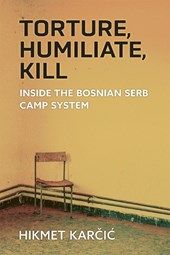
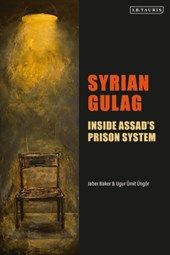
From incarceration of New England’s natives on Deer Island in Boston Harbor during King Philip’s War to British camps for Boers in South Africa and German camps for Herero in the early 20th century, the practice of concentration camps peaked with the Nazi system of death camps, but has outlived it too, and lasts until this very day. The persistence of this destructive practice calls for a thorough reflection. Professors Hikmet Karčić and Uğur Ümit Üngör have each devoted a book to this phenomenon and will engage in a conversation about these darkest corners of our world this afternoon.
About the speakers
Hikmet Karčić is a Research Associate at the Institute for the Research of Crimes against Humanity and International Law – University of Sarajevo. Bosnia and Herzegovina. And author of Torture, Humiliate, Kill: Inside the Bosnian Serb Camp System (University of Michigan Press, 2022). He was the 2017 Auschwitz Institute-Keene State College Global Fellow who has written extensively on genocide denial and atrocity prevention. A sought after commentator on international media outlets, his articles covering far-right extremism and mass atrocities have appeared in Haaretz, Newsweek and Foreign Policy.
Uğur Ümit Üngör is Professor of Holocaust and Genocide Studies at the University of Amsterdam and NIOD. His main areas of interest are the global history and sociology of genocide and mass violence, with a particular focus on the modern and contemporary Middle East. His publications include Genocide: New Perspectives on its Causes, Courses and Consequences (Amsterdam University Press, 2016, ed.), Confiscation and Destruction: The Young Turk Seizure of Armenian Property (Continuum, 2011), and the award-winning The Making of Modern Turkey: Nation and State in Eastern Anatolia, 1913-1950 (Oxford University Press, 2011)., Paramilitarism: Mass Violence in the Shadow of the State (Oxford University Press, 2020). He is an editor of the Journal of Perpetrator Research and review editor at H-Genocide. He teaches in the MA program on Holocaust and Genocide Studies, in the core course and the elective course “Mass Violence in the Middle East”. He is also coordinator of the Syrian Oral History Project, which had led him to this book.
Alma Mustafić (moderator) is an educational scientist, lecturer, and researcher at Utrecht University of Applied Sciences, and she will be the moderator during this event. Her main areas of interest are genocide and human rights education. Mustafić presented her autobiographical story in the theater performance ‘Dangerous Names,’ which marks the first theater production in the Netherlands from the viewpoint of Bosnian genocide survivors. As part of the research group on the social impact of art and culture, she investigates the social impact of this play. Additionally, she teaches in the Honours program on the Srebrenica genocide.
:rgb(-15,-3,-18)/https://admin.spui25.nl/wp-content/uploads/2026/01/pawel-czerwinski-dQriq2v8xxc-unsplash.jpg)

:rgb(-25,-2,1)/https://admin.spui25.nl/wp-content/uploads/2025/10/nedret-binici-j3ZnRpYrxHs-unsplash.jpg)

:rgb(8,-11,-35)/https://admin.spui25.nl/wp-content/uploads/2025/07/daniele-levis-pelusi-LyiuOfvh_8Y-unsplash.jpg)
