
The Politics of Platform Regulation
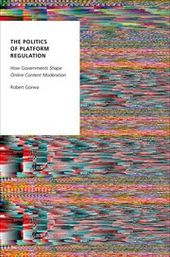
Countries around the world are moving to regulate big tech. In this event Robert Gorwa talks about his new book The Politics of Platform Regulation and places these trends in comparative perspective: what motivates governments to regulate the online environment, and what strategies do they deploy?
Online platforms such as YouTube and Tiktok act as governors of online exchange and expression. Their technical and bureaucratic infrastructures set international terms for online participation. But governments across the world are now reasserting control with expansive new frameworks to regulate big tech. Robert Gorwa’s book, The Politics of Platform Regulation, offers a comparative perspective on this new field of regulation. Through a series of case studies spanning Germany, the United States and Australia, he offers a peek behind the curtain of platform regulation: the diverse motives that drive governments to regulate online discourse and the various strategies they deploy to convince, collaborate or contest.
For a conversation on the book and its implications for the field, Robert is joined this afternoon by expert discussants from the University of Amsterdam: Thomas Poell and Linda Weigl.
About the speakers
Robert Gorwa is a postdoctoral researcher at the Berlin Social Science Center. He conducts interdisciplinary empirical and conceptual research addressing the politics of technology policy
Thomas Poell is Professor of Data, Culture & Institutions at the University of Amsterdam. His research examines how digital platforms are reshaping the protest movements around the globe, and how platforms and AI are intervening in crucial sectors of society.
Linda Weigl is a political scientist and postdoctoral researcher at the Institute for Information Law (IViR) at the University of Amsterdam. Her research focuses on the political economy of digital trust and risk.
Paddy Leerssen (moderator) is a legal researcher and postdoctoral researcher at the Institute for Information Law (IViR) at the University of Amsterdam. He is specialised in platform regulation and content moderation, with a focus on transparency and data access.
:rgb(-15,-3,-18)/https://admin.spui25.nl/wp-content/uploads/2026/02/nahrizul-kadri-OAsF0QMRWlA-unsplash.jpg)

:rgb(-25,-2,1)/https://admin.spui25.nl/wp-content/uploads/2026/02/Omslagfoto.jpg)

:rgb(8,-11,-35)/https://admin.spui25.nl/wp-content/uploads/2026/03/delicate.png)
