
Reframing Nature: Tracing Shifting Ecologies through Art
Depictions of the natural world in art offer profound insights into historical perspectives on humanity’s relationship with nature. In conversation with Estelle Zhong Mengual, Julia Kantelberg and Colin Sterling, we discuss the relation between aesthetics and ecology. How might art help us rethink our place within the natural world?
Whether presented as a mere decorative backdrop for human activities or as a complex language of motifs and symbols representing social realities, depictions of nature often reflect an anthropocentric worldview. The emergence of geological time and Darwin’s theory of evolution in the 19th century started challenging this perspective, and this shift is evident in the art of this period. This raises compelling questions: can art teach us to see ourselves as a mere part and co-habitant of the natural world, instead of its leading figure? Can the living world itself be integrated into our understanding of history?
About the speakers
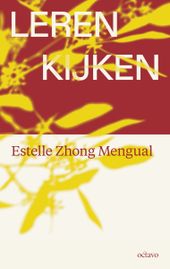
Estelle Zhong Mengual is a French art historian. She received her doctorate from Sciences Po in Paris, where she taught at the Master’s in art and politics, founded by Bruno Latour, for 6 years. She is now in charge of a chair at the National School of Fine Arts in Paris, titled “Inhabiting the landscape”. Her research regards our perception of the living world – past and present. In particular, she works on the development of an art history based on humanities, environmental and natural sciences. In 2023, she co-created with choreographer Jérôme Bel a piece titled “Non human dances” which premiered at the Louvre Museum. She is the author of several books. The Dutch translation of her book Apprendre à Voir (Leren Kijken) was recently published with Octavo Publicaties.
Colin Sterling is Assistant Professor / Senior Lecturer in Heritage, Museums and the Environment at the University of Amsterdam, where he teaches across heritage and memory, museum studies and artistic research. Colin’s research critically examines heritage and museums through the lens of art and ecology. He is the author of Heritage, Photography, and the Affective Past (Routledge, 2020) and co-editor of Deterritorializing the Future: Heritage in, of and after the Anthropocene (Open Humanities Press, 2020). He is co-editor of the journal Museums & Social Issues.
Julia Kantelberg is a Junior Curator at the Rijksmuseum in Amsterdam. Her research examines how art both reflects and influences human perspectives on nature.
Jacinta van de Ven (moderator) is a writer and researcher based in Amsterdam. Her work considers the negative dialectic of aesthetic mediation across the frameworks and intersections of queer theory, psychoanalysis, and philosophy. She is co-founder of the collaborative experimental artistic residency project October School.
Photo: Frederic Edwin Church, The Heart of the Andes, 1859. Oil on canvas, 168 × 302,9 cm. Metropolitan Museum of Art, New York. (Open Access)
:rgb(-15,-3,-18)/https://admin.spui25.nl/wp-content/uploads/2026/01/pawel-czerwinski-dQriq2v8xxc-unsplash.jpg)

:rgb(-25,-2,1)/https://admin.spui25.nl/wp-content/uploads/2025/07/climate-change.jpg)

:rgb(8,-11,-35)/https://admin.spui25.nl/wp-content/uploads/2025/09/annie-spratt-71amh7N_FgE-unsplash.jpg)
