Palestine and the Politics of Knowledge Production
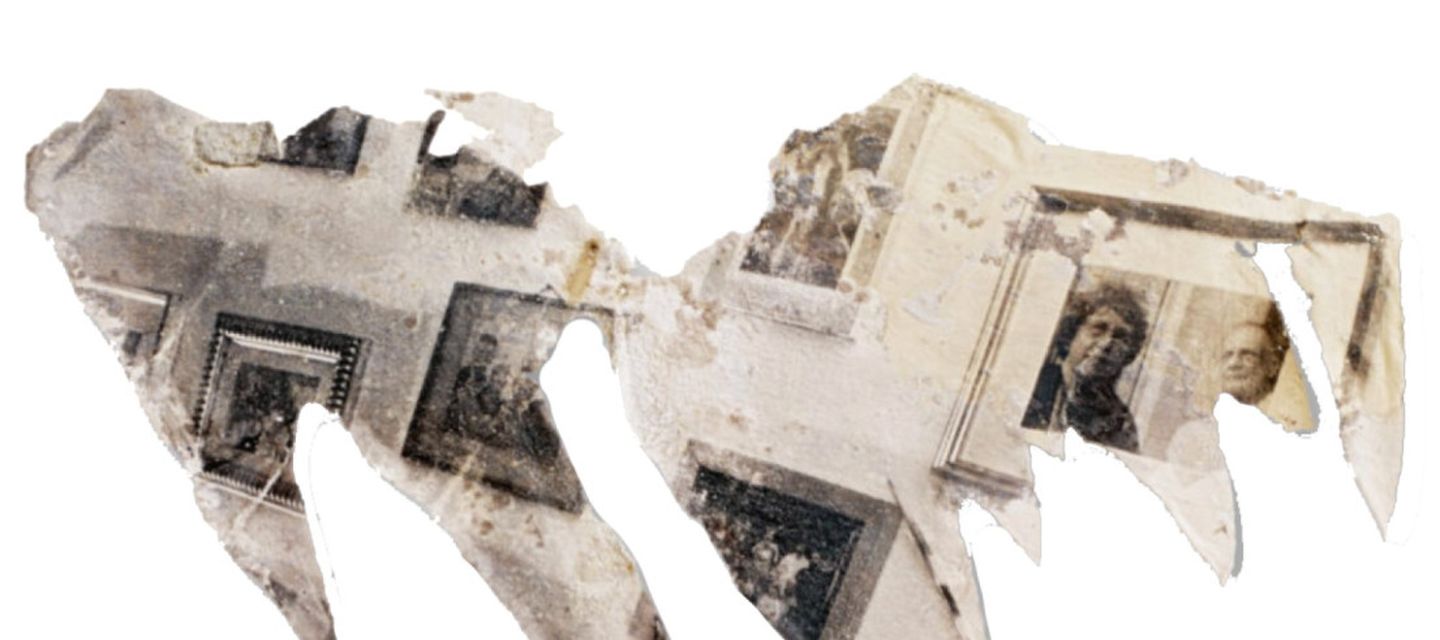
The word archive comes from the Greek word arkheion, a repository for official documents, and a place where the archons, the rulers, reside. Archives, then, are unequivocally associated with power and authority, at least in their original formation. But who and what is the archive for? Following her latest book Becoming Palestine: Toward an Archival Imagination of the Future, Gil Z. Hochberg presents her view of the archive as a liberatory site—particularly in Palestinian contexts.
What gets left out of the archive? What is the relationship between the archive and the public? What claims of authority and knowledge (scientific, historical, credible, provable) are made in the name of the archive? Professor of Hebrew and Comparative Literature, and Middle East Studies Gil Z. Hochberg will address these and related issues through the presentation of her latest monograph, Becoming Palestine: Toward an Archival Imagination of the Future (Duke University Press), where she examines how contemporary Palestinian artists, filmmakers, dancers, and activists use the archive in order to radically imagine Palestine’s future. By urging readers to think about archives as a break from history rather than as history’s repository, Hochberg presents a fundamental reconceptualization of the archive’s liberatory potential. The evening will conclude with a panel debate and public discussion.
About the speakers
Gil Z. Hochberg is Ransford Professor of Hebrew and Comparative Literature, and Middle East Studies at Columbia University and Chair of MESAAS. Professor Hochberg’s research focuses on the intersections among psychoanalysis, postcolonial theory, nationalism, gender and sexuality. Her first book, In Spite of Partition: Jews, Arabs, and the Limits of Separatist Imagination examines the complex relationship between the signifiers “Arab” and “Jew” in contemporary Jewish and Arab literatures and cultural imagination. Her second book, Visual Occupations: Vision and Visibility in a Conflict Zone, is a study of the visual politics of the Israeli-Palestinian terrain and the emergence of a “conflict” or the sight of a conflict.
Hanan Toukan is Associate Professor of Politics and Middle East Studies at Bard College Berlin. Her teaching and writings sit at the intersection of Middle East politics, postcolonial studies, visual cultures and cultural studies. Her book The Politics of Art: Dissent and Cultural Diplomacy in Palestine Lebanon and Jordan (2021) is published with Stanford University Press. Toukan’s writings have also appeared in Cultural Politics, Arab Studies Journal, International Journal of Cultural Studies, Radical Philosophy, Journal of Visual Culture, Journal for Palestine Studies, Review of Middle East Studies, Jerusalem Quarterly, SCTIW Review, Jadaliyya and Ibraaz amongst others.
Chiara De Cesari is Associate Professor in European Studies and Cultural Studies at the University of Amsterdam. Her research explores how forms of memory, heritage, art, and cultural politics are shifting under contemporary conditions of (post)coloniality, globalization and state transformation. She is the author of Heritage and the Cultural Struggle for Palestine (Stanford UP, 2019), and co-editor of two key volumes in memory studies. De Cesari is currently leading a major Dutch Research Council (NWO)-funded project named “Imagining Institutions Otherwise: Art, Politics, and State Transformation”.
Nat Muller is an independent curator, writer and researcher with an expertise in contemporary art from the Middle East. Her writing has appeared in international art magazines and academic journals such as Hyperallergic, Ocula, Science Fiction Studies and other publications. Recent exhibition projects include: the group show Trembling Landscapes: Between Reality and Fiction at Eye Filmmuseum in Amsterdam; the Danish Pavilion with Palestinian artist Larissa Sansour for the 58th Venice Biennale in 2019. She is completing a PhD in science fiction in contemporary art from the Middle East at Birmingham City University.
Noa Roei (moderator) is Assistant Professor at the department of Literary and Cultural Analysis at the University of Amsterdam and a research fellow at the Amsterdam School for Cultural Analysis (ASCA). Her work touches on various aspects of nationalism, militarism and visual culture and her current project addresses image infrastructures and the politics of spectatorship in contemporary art from the Middle East.

:rgb(-15,-3,-18)/https://admin.spui25.nl/wp-content/uploads/2026/01/pawel-czerwinski-dQriq2v8xxc-unsplash.jpg)

:rgb(-25,-2,1)/https://admin.spui25.nl/wp-content/uploads/2025/07/climate-change.jpg)

:rgb(8,-11,-35)/https://admin.spui25.nl/wp-content/uploads/2025/09/annie-spratt-71amh7N_FgE-unsplash.jpg)
